
Hello! We will continue to share updates about Sasabe Shintarō and the Sasabe Sakura Collection in 2026. We appreciate your continued support.
Last year, 2025, was the year of 80 years after the Pacific War. Sasabe Shintarō was born in 1887, and he passed away in1978, so he was active coincided with the turbulent period when Japan was at the war. The impact of the Pacific War, which began in December 1941, was particularly significant.
As previously mentioned, Sasabe had been collected materials such as documents and artworks for his research about cherry blossoms. Until moving to a residence in Okamoto, Kobe City in 1960, he lived in Osaka, where he was born and raised for many years. During the Pacific War, Osaka suffered more than 50 air raids including 8 times of major air raids. Concerned by the escalating war situation, he decided to evacuate his precious materials from Osaka to his own research forest, Ekiraku Sansou (in Takedao, Takarazuka City), driven solely by the desire to keep them as far away from the damage as possible. It was June 11, just a few days after the third major air raid on Osaka on June 7, 1945.
Sasabe evacuated Wahon (Japanese style books) at first, followed by hanging scrolls, prints and his handwritten records. According to the “Handwritten Records at Ekiraku Sansou,” wahon were packed at an average of approximately 10 kg per container. At times, he carried materials weighing as much as 25.5 kg by crowded trains.
The 11th evacuation on July 4, Sasabe carried 2 hanging scrolls passed down from ancestors away. The record in that day’s “Handwritten Records at Ekiraku Sansou vol.37,” he described “Except when my father carried them away during the great fire in 1909, they had never left the gates of the residence.” This reveals how dire the war situation had become at the time, compelling the evacuation of even family heirlooms.
027_t-271x1200.jpg)
One of these was donated to Osaka Tenmangu Shrine on August 25, 1979, after Sasabe’s death, in accordance with his wishes expressed during his lifetime. It is still carefully preserved as one of the sacred treasures of the shrine, with the same mounting as it had at the time.
The evacuation was finished August 14 because of the end of the war on August 15. Along the way, Sasabe had considered evacuating his own living quarters as well, but did not settle permanently at Ekiraku Sansou, prioritizing the evacuation of his collection instead. The fighting advanced to the very front of his house across the road, yet his house, storehouse, and the collection that would become the present-day Sasabe Sakura Collection miraculously survived the war unscathed. In his autobiography “Sakura Otoko Gyōjō,” he recalls a friend who supported his cherry blossom research at the time telling him: “Everyone thought that your house couldn’t possibly survive, yet it was saved. You were survived under the patronage of cherry blossoms. No matter what happens in the world, you must never let them fall into ruin.”
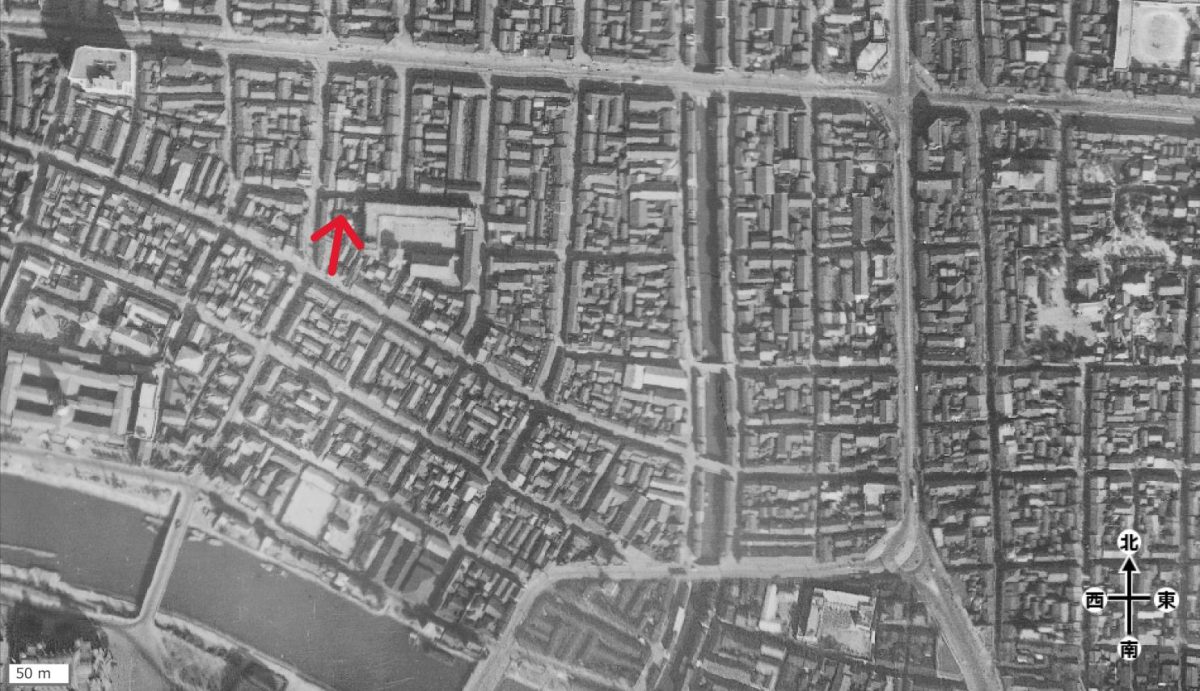
The red arrow indicates Sasabe’s residence.
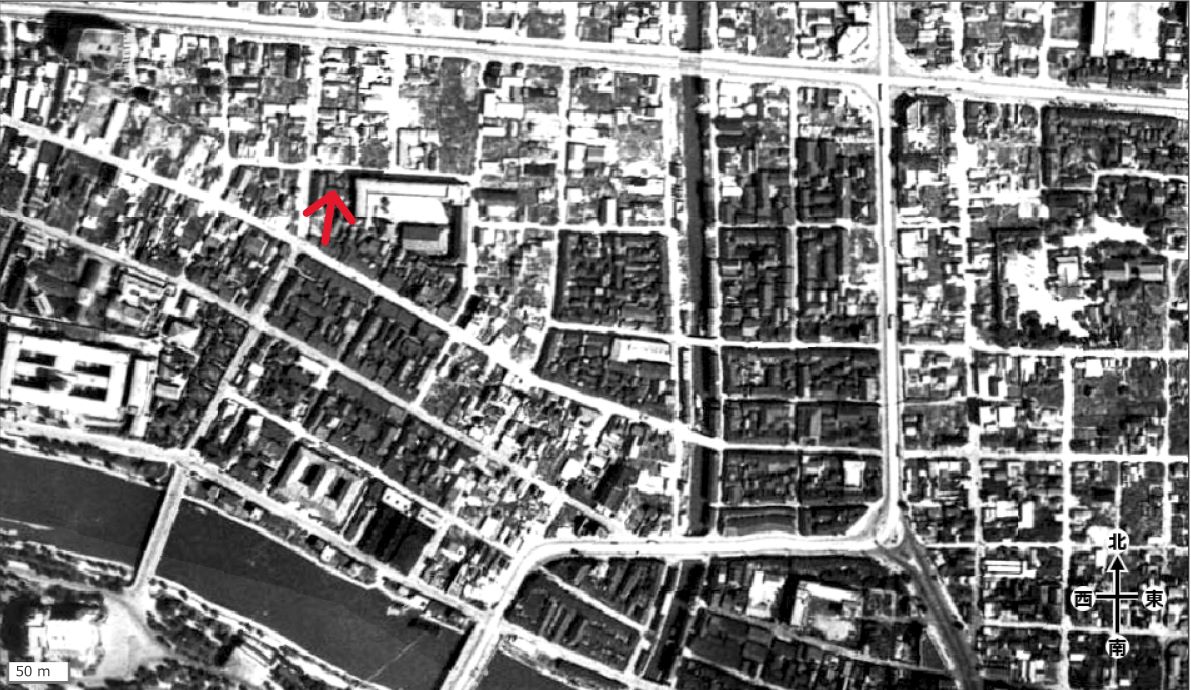
The building across from his house was no longer there.
左:Geographical Survey Institute tiles
https://cyberjapandata.gsi.go.jp/xyz/ort_riku10/17/114872/52051.png
右:Geographical Survey Institute tiles
https://cyberjapandata.gsi.go.jp/xyz/ort_USA10/17/114872/52051.png
The current Sasabe Sakura Reference Room Exhibition “80 Years After the War: Man of Sakura’s Memories and Records” displays materials related to Sasabe’s activities of cherry blossoms before, during, and after the war, including the documents introduced here. Please see the history of his activities. Please look forward to the next article!
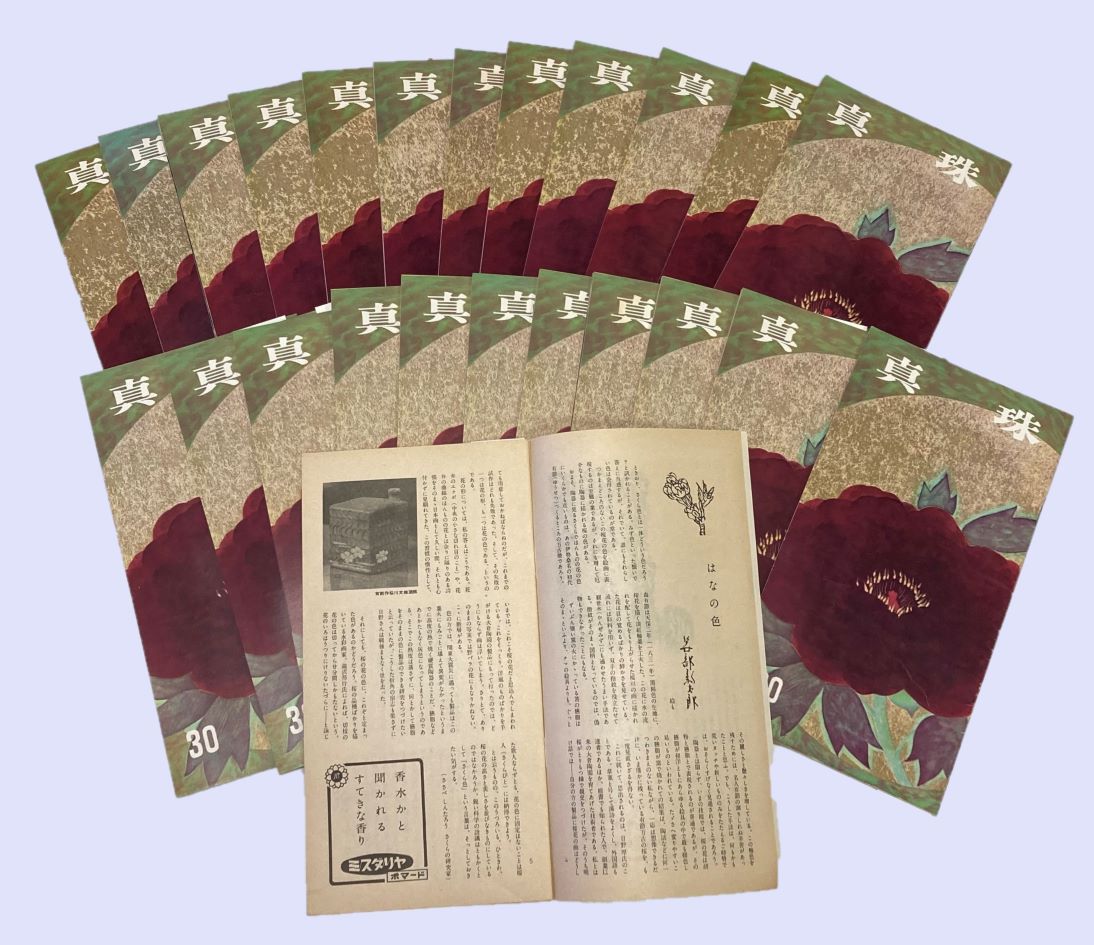


Let’s see the Sasabe’s bookshelf!